THE CELL
Two columns of three
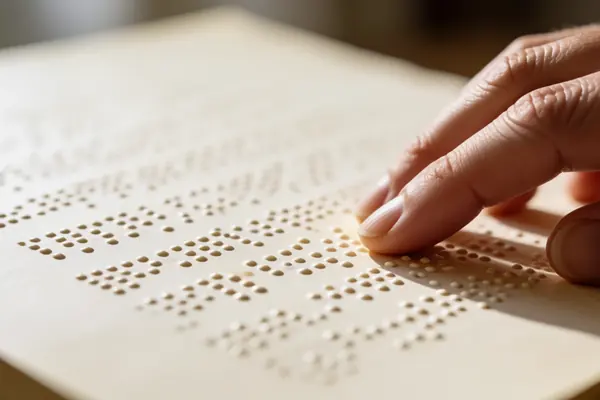
RNIB explains that braille is based on cells of six dots, numbered one to six from top left to bottom right. With the blank cell there are 64 braille characters.
Compare methods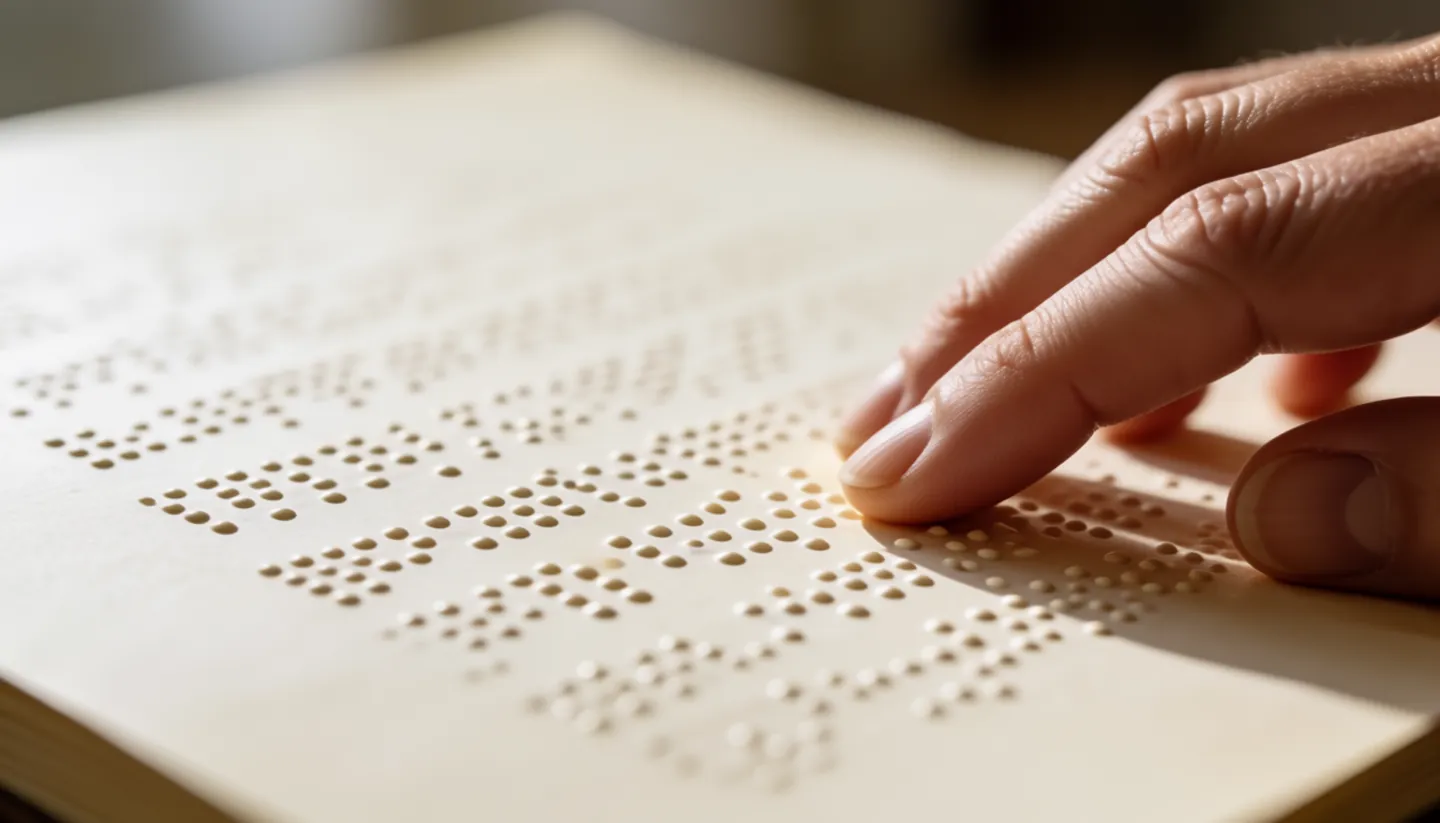
HOW BRAILLE IS PRINTED
6 dots per braille cell
AI-generated image, not a photograph of a real person or place.
Each braille character is a cell of up to six raised dots.
Two columns of three dots give 64 possible characters, including the blank space. Braille can be punched by hand, typed on a mechanical brailler or embossed by a printer, and it is two centuries old.
THE SHORT ANSWER
Braille represents letters, numbers and punctuation.
Each country sets its own rules for using it.
THE CELL
RNIB explains that braille is based on cells of six dots, numbered one to six from top left to bottom right. With the blank cell there are 64 braille characters.
Compare methodsWRITING IT
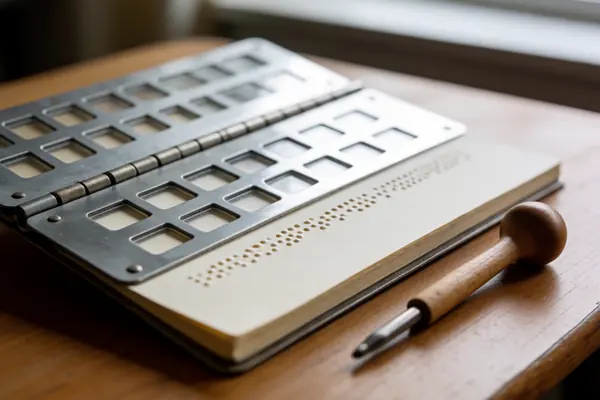
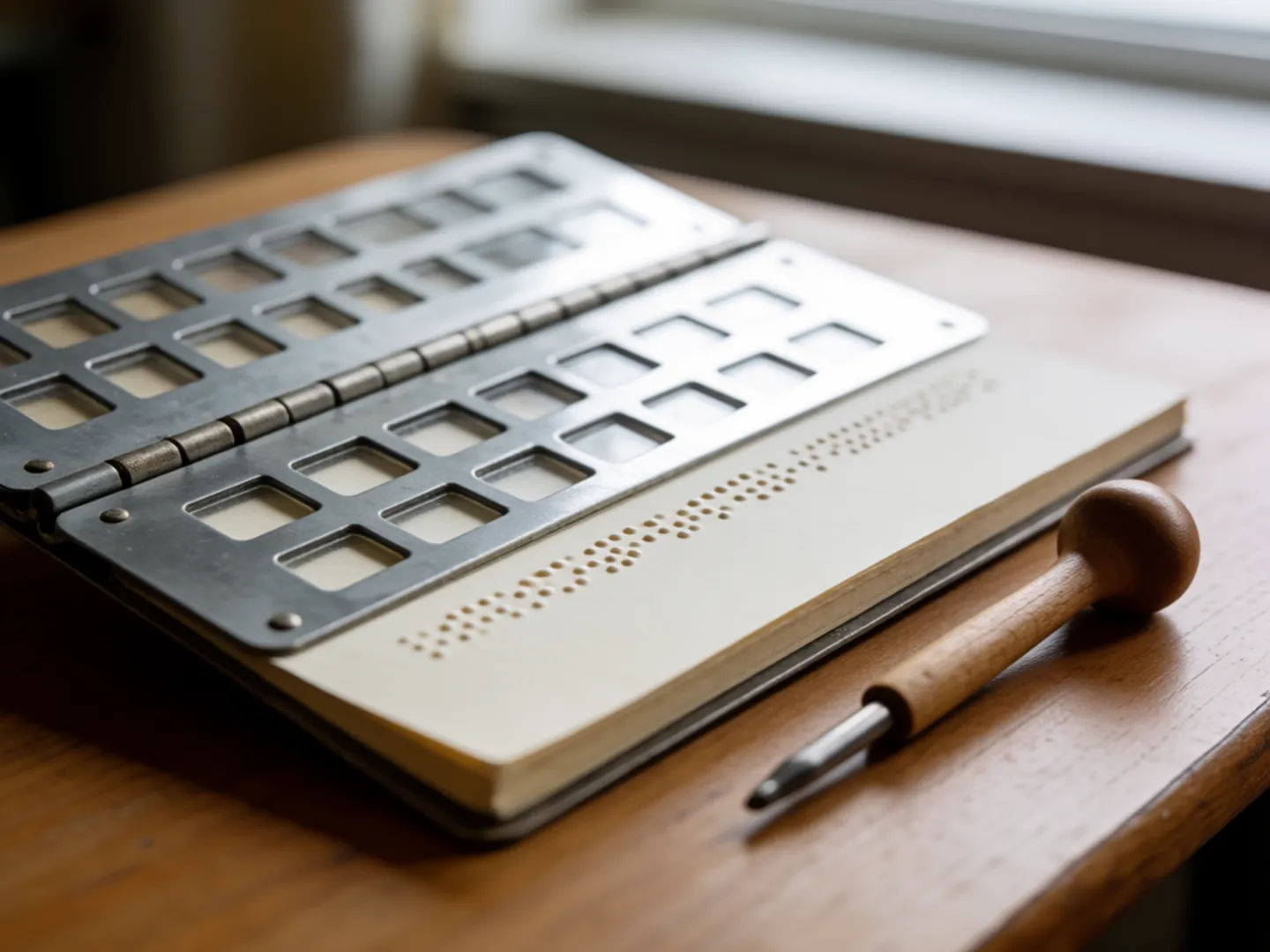
With a hand frame the writer presses dots into the back of the paper, so they work backwards. Mechanical braillers let people write braille the way they read it.
How it's madeEVERYDAY USE
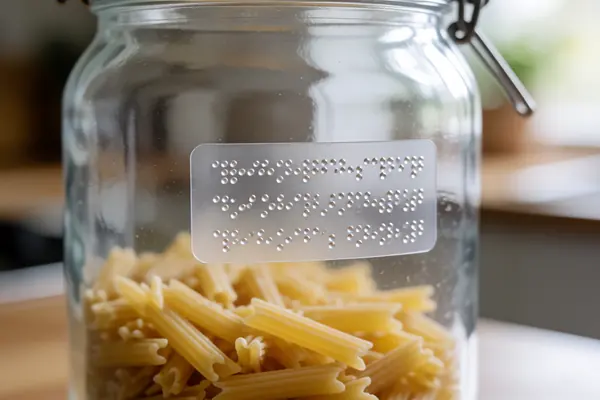
RNIB says braille is used in small daily doses too: medication, food labels and bank statements. Medicine packaging tops the list of uses in its survey.
See the numbers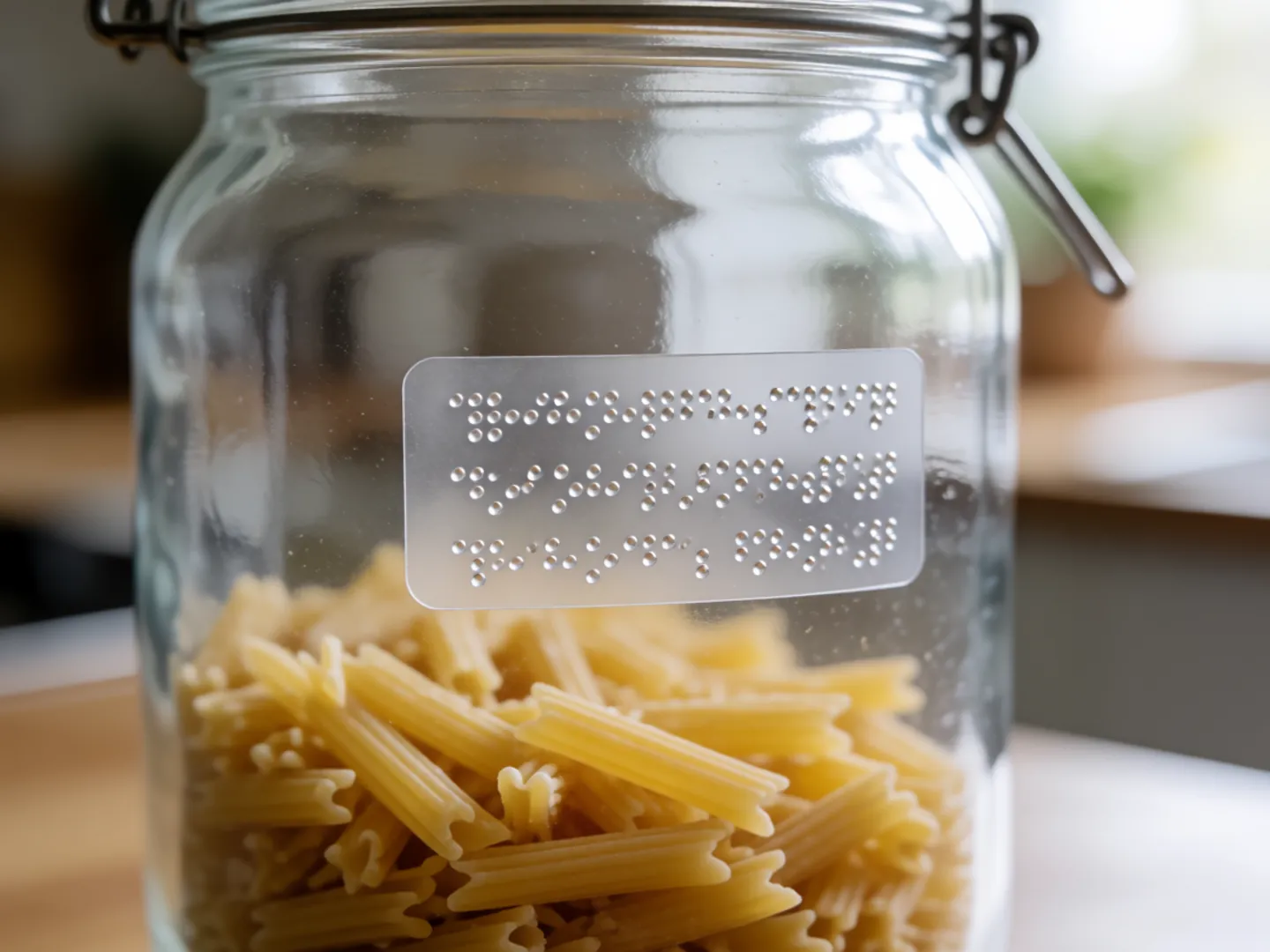
FOUR THINGS TO GET RIGHT
Useful if you are making signs, labels or documents for braille readers.
The UK's official code is Unified English Braille, which replaced Standard English Braille after a transition ending in 2015.
Braille is read by touch, so flat printed dots do not work. RNIB notes a worrying number of 'braille fails' on signage.
Uncontracted (grade 1) spells everything out and every braille reader knows it. Contracted (grade 2) uses shorthand and is used for almost all books and magazines.
RNIB found requesting information in braille from banks and from local and national government was common among braillists.
TWO NUMBERS WORTH KNOWING
One figure for how many use braille,
one for how often braillists use it.
≈ 7%
Registered blind or partially sighted people who use braille
RNIB's estimate. Many use braille in small daily doses, for medication, food labels and bank statements, rather than for long reading.
WHO USES IT · RNIB
3 in 4
Survey respondents using braille at least several times a week
More than half used it daily, in RNIB's Braille 200 research with adults who know braille. Medication packaging was the most common use.
HOW OFTEN · RNIB 2024
In the same research, 79 percent of participants reached their level of confidence in braille within two years, and six in 10 learnt it at school or for education.
A QUICK METHOD CHECK
Pick a method to see how it works. The bar runs from the oldest, most manual methods to the newest digital ones.
Based on RNIB's guidance and its Ten essential braille facts.
SHORTHAND IN DOTS
Contracted braille adds signs for common words and letter groups, such as THE, FOR, ING and SH, and single letters can stand for words: b for but, h for have. RNIB says this makes braille quicker to read and write, and books much less bulky.
Numbers use the first ten letters with a number sign in front, made from dots 3, 4, 5 and 6. Braille was developed in the 1820s by a teenager adapting a 12-dot system soldiers used to communicate in the dark.
In conversation
Each character is a cell of six possible dots in two columns of three. Different combinations represent letters, numbers, punctuation, words and even music, read by touch.
Uncontracted (grade 1) spells out each letter. Contracted (grade 2) adds signs for common words and letter groups, so it is quicker to read and takes less space.
RNIB estimates about 7 percent of people registered blind or partially sighted use braille, many in small daily ways such as labels and medication.
By hand with a frame and stylus, on a mechanical brailler, or with an embosser. Braille displays offer a refreshable digital alternative linked to phones and computers.
Unified English Braille (UEB), adopted by the UK Association of Accessible Formats in 2011, replaced Standard English Braille after a transition to the end of 2015.
Each figure on this page comes from the sources below.
ABOUT THIS NAME
radprinter.com is part of the DoodleSale portfolio. It isn't in an auction right now, but you can ask about leasing it.